


Baseball Franchise Manager
3.422.00 Reviews
App Specs
- Version
- 1.0.56
- Updated On
- License
- Free
- Downloads
- 10,000+
- Developer
- Grand Pike AB
- Categories
- Sports
- Platform
- Android
Screenshots
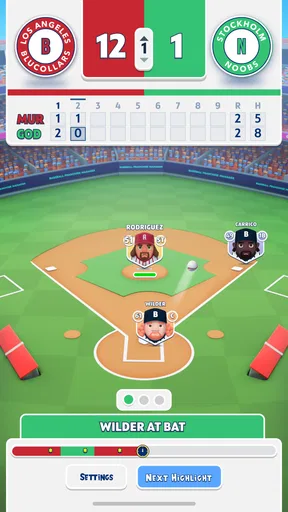
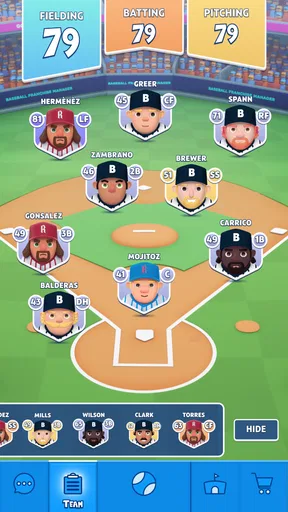
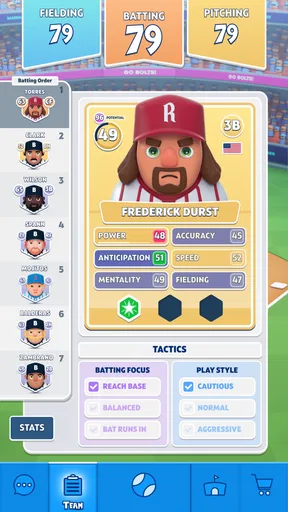
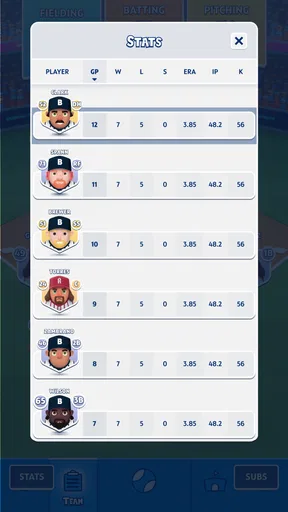

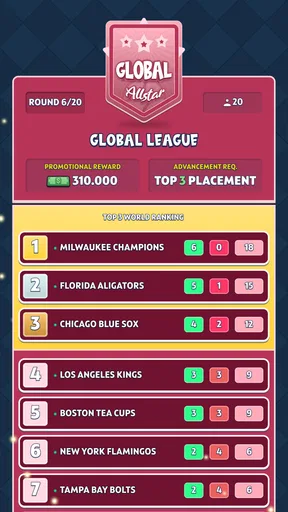
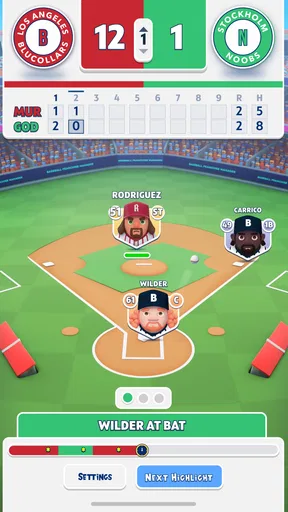
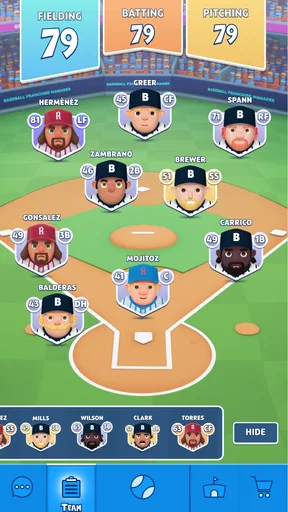
 Analysis by AppCompare
Baseball Franchise Manager is the kind of sports game I open when I want to think like a team builder rather than control every pitch myself. Instead of putting me directly on the field, it places the club’s bigger decisions in my hands: finding players, shaping a roster, developing talent, and trying to turn those choices into wins. That makes it a very different experience from an arcade baseball title or a traditional match simulator.
After spending time with it, I see the appeal clearly. The game is compact in concept but potentially demanding in judgment. A good result depends less on quick reactions and more on whether I can read the situation, decide what the squad needs, and resist making short-term moves that weaken the team later. It is free to play, belongs to the sports category, and comes from Grand Pike AB. Its age rating is Everyone, so it is presented as a broadly approachable game rather than an adult-only management experience.
The important question is not whether it looks like a full console baseball simulation. It does not need to be that. The better question is whether its management focus gives me enough meaningful decisions to make whenever I return. For players who enjoy planning, scouting, and gradual improvement, the answer is often yes. For someone looking for immediate action, realistic on-field controls, or a highly visual presentation, the fit is less convincing.
How the management format affects readability and navigation
I find the management format easiest to read when I treat each screen as a decision point, not as a checklist to clear. That small change helps me focus on what the roster needs and makes short sessions feel purposeful rather than scattered. It also raises a useful next question: how do the game’s management choices shape the way I navigate from one task to another?
Menus matter more than reflexes
Because this is a franchise-management game, the information on screen carries more weight than rapid movement. I spend my attention comparing player options, considering team needs, and deciding which action deserves priority. That is useful for players who find fast sports games tiring or difficult to follow, because the central challenge is deliberate rather than reaction-based.
There is also a practical advantage in being able to pause mentally between decisions. I can look at a roster problem, think about the consequences, and return to the next choice without needing perfect timing. This creates a calmer rhythm than a game built around continuous live play. If you prefer to process information slowly, that structure is one of the strongest reasons to try it.
At the same time, management games can become visually dense even when their rules are simple. A screen may contain several competing pieces of information, and the real difficulty can be knowing which detail deserves attention first. I found that the best way to approach a session is to give myself one clear objective: strengthen a weak area, evaluate a possible move, or focus on development. Trying to inspect everything at once makes the experience feel more demanding than it needs to be.
Worth Reading Before You Choose

EA SPORTS FC Mobile 26 Is a Bigger Football Game, but It Takes Time

Flipboard Shows What News Apps Must Do Beyond the Feed

Switching to Android Auto Means Rethinking Your Driving Routine

Google Calendar Makes a Crowded Week Easier to Manage

Ludo King Makes the Most of the Minutes Between Plans

Baby Panda World Brings Quick Play to Modern Phones, but Its Game Library Feels Busy
A useful routine for keeping the interface manageable
My preferred workflow is to begin with the current state of the team rather than immediately chasing a new player. I first ask what is actually holding the roster back. Is the problem a lack of depth, an underdeveloped prospect, or a short-term weakness that can be tolerated? This simple order turns the game from a stream of menus into a series of understandable questions.
That approach is especially helpful for players who struggle with working memory. Instead of trying to retain every name and option, I keep a small mental brief for the session. For example, I might decide that today is about improving depth and avoid making unrelated changes. The game’s appeal grows when decisions are grouped into manageable tasks rather than treated as one giant management puzzle.
Players who rely on large text, strong contrast, screen readers, or other specific interface accommodations should inspect the actual device experience before committing to long sessions. I would not assume that a sports-management game automatically provides every accessibility option someone may need. The strategic format reduces pressure, but it does not by itself guarantee that every label, icon, or visual distinction will be equally easy to interpret.
Why the game can be easier to understand than a live sports simulator
Compared with a baseball game that asks me to aim, swing, throw, and react in real time, this title puts fewer demands on hand-eye coordination. That makes it a more realistic choice for someone who enjoys baseball but does not want repeated timing tests. It also suits players who prefer reading a situation and making a plan to physically executing every play.
The trade-off is that the game’s feedback may feel less immediate. In an action-focused alternative, I can see the direct result of a swing or pitching decision. Here, satisfaction comes from the broader arc of team building. A player who needs constant visual confirmation may find that slower reward cycle less engaging, while someone who enjoys gradual progress may find it more relaxing.
Motor and sensory considerations during play
The management emphasis is naturally friendlier to players who have difficulty with rapid taps, repeated gestures, or precise touch controls. I am not being asked to perform a long sequence of athletic inputs just to keep a game alive. That makes short planning sessions possible even when my hands are tired or when I am playing in a less comfortable position.
There is still a difference between low reflex demand and low motor demand. Touch navigation can require repeated selection, scrolling, or switching between areas of the team. For some players, that may become uncomfortable over time. I would use shorter sessions, enlarge the device display where possible, and avoid making roster changes while distracted or physically uncomfortable. These are practical habits, not substitutes for built-in accessibility settings.
Sensory needs also deserve a realistic look. A management game may be less visually intense than a fast baseball match, but it can still depend on small distinctions between players, categories, statuses, or actions. If important information is communicated mainly through color, icons, or compact text, color-blind players and people with reduced vision may need extra care. I would not treat a clean sports theme as proof that every visual cue is independently understandable.
For players sensitive to motion or rapid animation, the strategic pace may be more comfortable than a constantly moving field. However, the exact comfort level will depend on the device and the way game events are presented. My advice is to test a brief session first, especially if visual transitions or busy screens commonly cause fatigue. The free entry point makes that trial less risky than buying a premium game before knowing whether its presentation suits you.
Situational access: where it fits into everyday life
This is a good game for the moments when I have enough attention for a few decisions but not enough time for a full match. I can imagine opening it during a commute, waiting for an appointment, or taking a quiet break after work. The franchise format supports stop-and-start play better than a game that punishes me for leaving mid-match, although I still prefer to finish a decision before putting the phone away.
A realistic example would be a player who has ten minutes before collecting a child from school. Rather than beginning a complete baseball game and worrying about interruption, they could review the roster, consider a trade, or plan the next development step. The key is to enter with a limited goal. If the player starts browsing every possible option, the short break may disappear into indecision.
It can also work well for people who share a room with others. The strategic focus does not require loud commentary or constant attention to a large screen in the same way a competitive action game might. That said, anyone who needs a completely quiet experience should check the actual device behavior and personal settings rather than assuming every sound or visual effect can be adjusted exactly as desired.
The game’s Everyone rating makes it easier to consider for mixed-age households. Still, an age label is not a promise that every player will understand the management systems immediately. Younger players may enjoy the idea of running a club but need help interpreting the consequences of trades, training, and roster choices. An adult can turn that into a useful shared activity by discussing why a short-term improvement may not be the best long-term decision.
It is also a reasonable option for baseball fans who cannot follow a full season in real time. The manager perspective lets me engage with the sport through planning rather than watching every contest. I would not choose it as a replacement for live baseball coverage, but it offers a more active way to think about team construction when I have only a phone available.
What makes its strategic loop worthwhile
The central strength is the connection between several management responsibilities. Scouting gives me a reason to look beyond the current roster. Drafting asks me to think about future value rather than only immediate performance. Trading tests whether I can improve one area without creating another weakness. Training adds a longer view, because a player is not merely a fixed item to collect.
Those systems encourage a useful discipline: do not judge every decision by the next result. A move that looks modest may improve depth, create flexibility, or give a developing player room to grow. Conversely, a flashy acquisition may leave the team unbalanced. I found that the most satisfying sessions came from making a coherent plan and watching several choices support one another.
One non-obvious tip is to treat the roster as a budget of attention, not just a list of names. If I spend all my time searching for a perfect addition, I neglect the players already available to improve. A better workflow is to identify the team’s most urgent weakness, check whether internal development can address it, and only then consider outside changes. That keeps the management loop from becoming an endless search screen.
Another useful trade-off is between immediate competitiveness and patient development. Training can be attractive because it promises improvement without changing the identity of the team, but patience may be difficult when a quick roster move appears available. I recommend deciding in advance whether the current season is about winning now or building a stronger foundation. Without that rule, it is easy to spend resources in conflicting directions.
A third insight is that drafting and trading should not be evaluated in isolation. A player who looks valuable may not solve the position where the club is actually thin. I get better results when I consider role, depth, and development together. This sounds obvious, but management games often tempt me to chase the most interesting option instead of the most useful one.
Where the free-to-play model changes the experience
The game costs nothing to start, which is a meaningful advantage for anyone unsure whether a baseball manager format will hold their attention. I can test the basic rhythm before deciding whether it deserves a regular place on my phone. The current version is 1.0.56, and the listed minimum operating-system requirement is 7.1, so compatibility reaches back to older mobile software than many current games.
There are in-app purchases ranging from $1.99 to $104.99 per item. That wide range means I would approach spending carefully, particularly if I were playing with a child or trying to keep the experience strictly free. The free entry point is useful, but it should not be confused with a completely purchase-free design. I recommend setting a personal limit before playing and treating paid options as optional rather than necessary to enjoy the management concept.
This monetization structure can affect accessibility in a broader sense. A player with limited disposable income may be able to play, but may feel pressure if progress appears easier through purchases. That is an important distinction: financial access is part of the overall user experience. For me, the safest approach is to judge the game by the decisions available without spending and avoid allowing the shop to define the pace of the franchise.
Players who dislike any free-to-play friction should consider a paid premium alternative instead. A one-time purchase may offer a more predictable experience, even if it lacks the same baseball-management focus. On the other hand, someone who wants to experiment without paying upfront may reasonably prefer this game, provided they are comfortable managing optional spending.
Remaining barriers and who should skip it
The biggest barrier is conceptual rather than physical: this is not a quick baseball action game. Someone who wants to control every at-bat may find the manager role too distant from the sport. The same applies to players who need a constant stream of dramatic events. The satisfaction here comes from preparation, trade-offs, and the gradual shape of a team.
Another barrier is the possibility of information overload. Even players who enjoy sports may not enjoy comparing several layers of roster decisions. If you prefer games with one obvious objective and immediate feedback, this can feel like work. I would skip it if I knew I wanted a short burst of action rather than a continuing project.
It may also be a poor fit for anyone who requires confirmed, specialized accessibility controls before playing. The strategic pace helps reduce some reflex and motion pressure, but I would not rely on that alone for needs involving text scaling, color independence, audio description, switch access, or screen-reader navigation. Those players should test the interface with their own device and assistive setup first.
There is a social barrier as well. A franchise manager is usually a personal planning experience, not the same as competing directly with friends in a live match. If your priority is shared, immediate competition, a multiplayer baseball alternative will probably be more satisfying. If you enjoy comparing decisions, discussing roster construction, or quietly building a club over time, this format makes more sense.
The install base is over ten thousand, which places it in the smaller end of the mobile-game audience rather than among the giants of the sports category. I do not see that as a quality verdict, but it does set expectations. This feels like a focused management title for a particular audience, not a universal baseball product designed to please every kind of fan.
My inclusive verdict for different players
I recommend Baseball Franchise Manager to players who want baseball strategy without the physical demands of controlling every play. Its strongest accessibility quality is the structure of the game itself: I can think through scouting, drafting, trading, and training instead of racing through constant inputs. That makes it promising for slower, more deliberate play and for short sessions built around one clear decision.
I also appreciate that the game can serve different contexts. A committed baseball fan can use it as a long-term team-building hobby, while a casual player can dip in during spare moments. A younger player may enjoy the role-playing idea of running a club, and an older player may appreciate the planning more than the action. The Everyone rating supports that broad audience, although individual reading, vision, motor, and sensory needs still require personal testing.
My recommendation comes with boundaries. Keep the roster process focused, decide whether you are prioritizing immediate results or development, and be cautious with the in-app purchase range. If a screen feels crowded, work through one team problem at a time rather than trying to master every option in a single sitting. Those habits make the game easier to approach and reduce the temptation to make impulsive decisions.
Grand Pike AB has chosen a clear niche: a mobile sports game for people who would rather run the baseball organization than perform every action on the field. I think that focus is its main strength and its main limitation. It offers a thoughtful alternative to reflex-heavy baseball games, but it will not replace them for players who want direct control and immediate spectacle.
Overall, I would give it a try if you enjoy management, gradual improvement, and decisions that have consequences beyond one moment. I would skip it if you need fast action, highly explicit accessibility tools, or a completely purchase-free environment. For the right player, the game’s free starting point and calm strategic rhythm make it an approachable way to spend a few minutes or build a longer baseball project.
Pros
- Detailed roster management and long-term franchise planning
- Useful statistics help guide trades
- lineups
- and player development
- Season progression feels rewarding for dedicated baseball fans
- Multiple strategic decisions make each franchise playthrough unique
- Runs smoothly on most modern Android and iOS devices
Cons
- Steep learning curve for players unfamiliar with baseball management
- Some features may feel repetitive during long seasons
- Limited appeal if you prefer real-time baseball action
- Advanced options can make quick sessions difficult
- May require patience while simulations process game results
FAQs for Baseball Franchise Manager
What is Baseball Franchise Manager?
Baseball Franchise Manager is a baseball simulation and management game focused on building and running your own professional team. Instead of controlling every pitch directly, you make decisions as a general manager, including roster construction, trades, contracts, scouting, player development, lineups, and long-term strategy. It is designed for users who enjoy statistics, planning, and franchise progression more than arcade-style gameplay.
How does gameplay work in Baseball Franchise Manager?
The game revolves around managing a baseball organization across multiple seasons. You evaluate player performance, set lineups and pitching rotations, negotiate contracts, make trades, manage finances, and monitor prospects. Matches are generally experienced through simulations, reports, and statistical results rather than direct on-field controls. Your choices influence team chemistry, competitiveness, budget flexibility, and the future development of the franchise.
Is Baseball Franchise Manager suitable for beginners?
Baseball Franchise Manager can be enjoyed by beginners, although players unfamiliar with baseball management terminology may need time to understand statistics, contracts, player roles, and roster rules. The experience is more accessible if you learn gradually and avoid making too many major changes at once. Experienced baseball fans will likely appreciate the deeper strategic options, while casual users may find the menus and data initially overwhelming.
Does Baseball Franchise Manager require an internet connection or include in-app purchases?
Requirements can depend on the version and platform available on your device, so it is important to check the official store listing before downloading. Some features may work offline, while online services, updates, synchronization, advertisements, or account-related functions could require connectivity. You should also review the store page for current information about optional in-app purchases, pricing, and whether any premium content affects progression.
What should I know before downloading Baseball Franchise Manager?
Before downloading, remember that this is a statistics-heavy management simulation rather than a fast-paced baseball game. Its appeal comes from making careful decisions, analyzing results, and developing a franchise over time. Check your device compatibility, available storage, supported language, privacy information, and the latest user reviews. Players who prefer direct action may find it slow, but strategy and sports-management fans will find considerable depth.


